Pipe Repair products offer a fast, safe way to seal splits, holes, and corroded sections instantly – often under full system pressure – avoiding the need for expensive and time-consuming network shutdowns.
Maintaining pipeline infrastructure is an ongoing challenge for water and wastewater utilities. Ageing assets, increasing leakage targets, and rising operational costs are placing greater demand on maintenance teams to deliver fast, effective repairs while keeping networks operational.
By adopting practical, adaptable repair and maintenance strategies, utilities can better manage ageing networks, reduce leakage, and maintain service continuity while controlling cost and disruption.
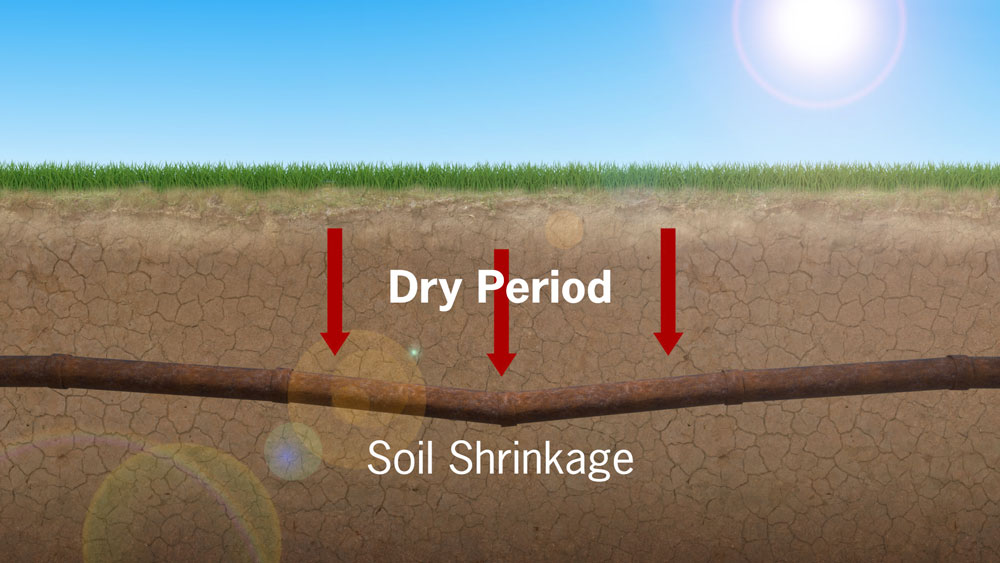
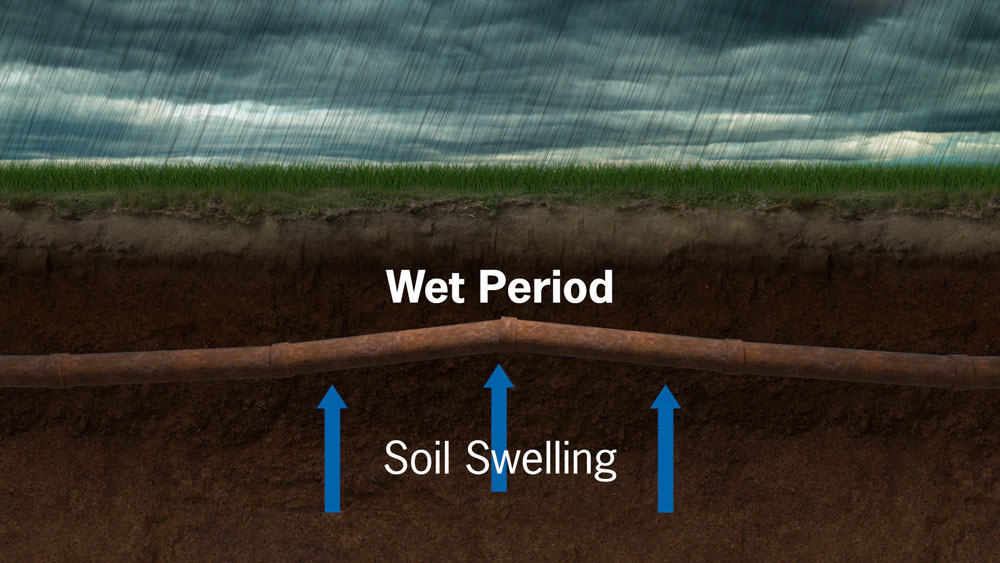
Example of soil shrinkage in dry periods and soil swelling in wet periods flexing a buried pipe.
Key Utility Industry Challenges
1
Ageing infrastructure
Much of today’s pipeline infrastructure has exceeded its original design life. Over time, factors such as corrosion, ground movement, and pressure fluctuations weaken pipes and joints, increasing the risk of leaks and bursts. In many cases, full replacement is not practical, making reliable, targeted repair solutions essential to extending asset life and maintaining performance.
2
Leakage at joints
Leakage remains one of the most pressing issues, often occurring at joints, connections, or deteriorated pipe sections. Repairs are frequently required under live conditions, where the priority is to quickly restore integrity, minimise water loss, and avoid disruption to supply. This demands solutions that can be installed rapidly and perform reliably under pressure.
3
Network variability
Pipelines are often constructed from a mix of materials, with differing diameters and inconsistent tolerances. This makes standardisation difficult and places greater emphasis on adaptable repair approaches that can accommodate real world conditions without extensive preparation or precise measurement.
4
Joint performance & restraint
Joint performance and restraint also play a critical role in long-term reliability. Traditional joints provide a seal but may not prevent movement under pressure, increasing the risk of joint separation or repeat failure. Modern maintenance strategies increasingly focus on combining sealing and restraint to improve overall system security.
5
Thermal, pressure & ground movement
Pipelines are subject to ongoing stress from thermal change, pressure variation, and ground movement. Without adequate flexibility, these forces can accelerate wear and lead to failure. Effective repair and maintenance approaches must therefore address both immediate issues and the wider mechanical demands placed on the system.
6
Constrained environments
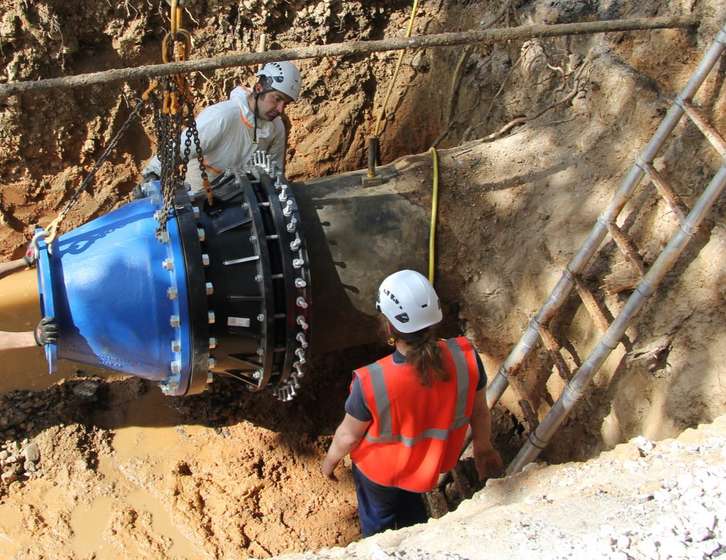
Repairs are often carried out in constrained or high pressure environments, urban locations, restricted excavations, and time critical situations. Solutions must be simple to install, minimise downtime, and reduce the impact on surrounding infrastructure.
Projects
Keeping Critical Infrastructure Flowing
Maintaining pipeline performance requires reliable solutions for repair, replacement and network upgrades. Explore our projects to see how Viking Johnson products help customers minimise disruption, extend asset life and keep critical infrastructure operating efficiently.
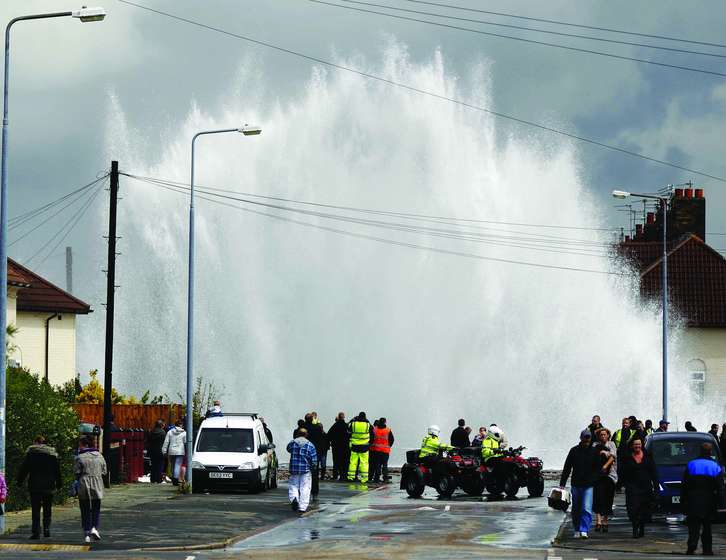
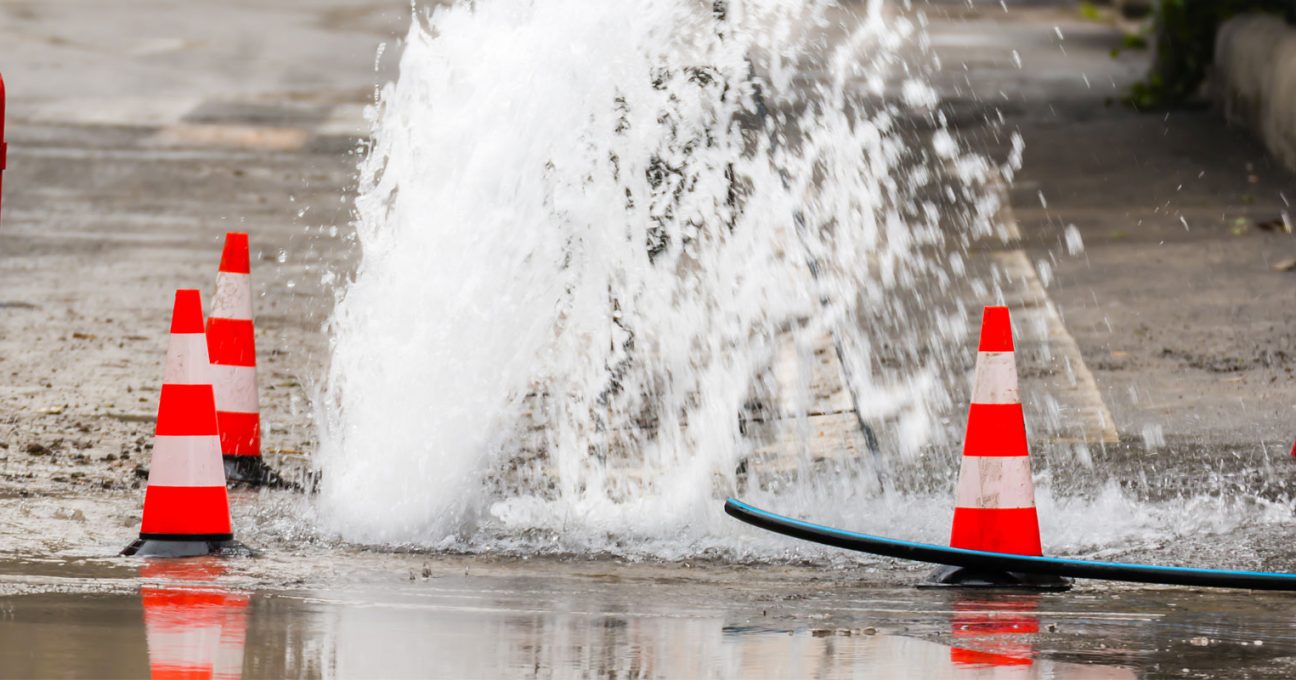
During the summer of 2011, an area of Liverpool experienced catastrophic flooding when a water mains pipe burst, sending huge plumes of water into the air.
Many of the products in the Viking Johnson’s portfolio, like UltraGrip , MaxiFit , EasiRange & HandiRange offer solutions to the technical challenges faced by consultants’ engineers, contractors and owners working in the power generation sector.
Find your local contacts
Choose a continent, country and region, then select View Contact Details to see the area managers and distributors covering your location.
Area Managers
Please select a country or region to view area managers.






















 Water
Water
 Waste Water